
From World Leader to Modest Modern Producer: The Story of Malaysian Pineapple
Malaysia, was once home to the top 3 biggest pineapple production factories in the world in the 60’s and early 70’s, has a relatively modest industry today. Today, Malaysia has a total of more than 17,601 hectares of pineapple plantation.
Malaysia is one of the world’s major producers of pineapples besides Thailand, Philippines, Indonesia, Hawaii, Ivory Coast, Kenya, Brazil, Taiwan, Australia, India and South Africa. Pineapple fruit has a high market. Pineapple was introduced in Malaya in the 16th century by the Portuguese. In line with the development of rubber plants, in 1921 the pineapple was cultivated in Singapore, Johor and Selangor as a cash crop. Pineapple plants continue to grow and cultivate in peatlands especially in Johor.
The pineapple, Ananas comosus is a tropical plant with edible fruit. Pineapples may be cultivated from the o set produced at the top of the fruit, possibly owering in ve to ten months and fruiting in the following six months. Pineapples do not ripen signi cantly after harvest. It grows well, both in the plains and also at elevations not exceeding 900 meters.
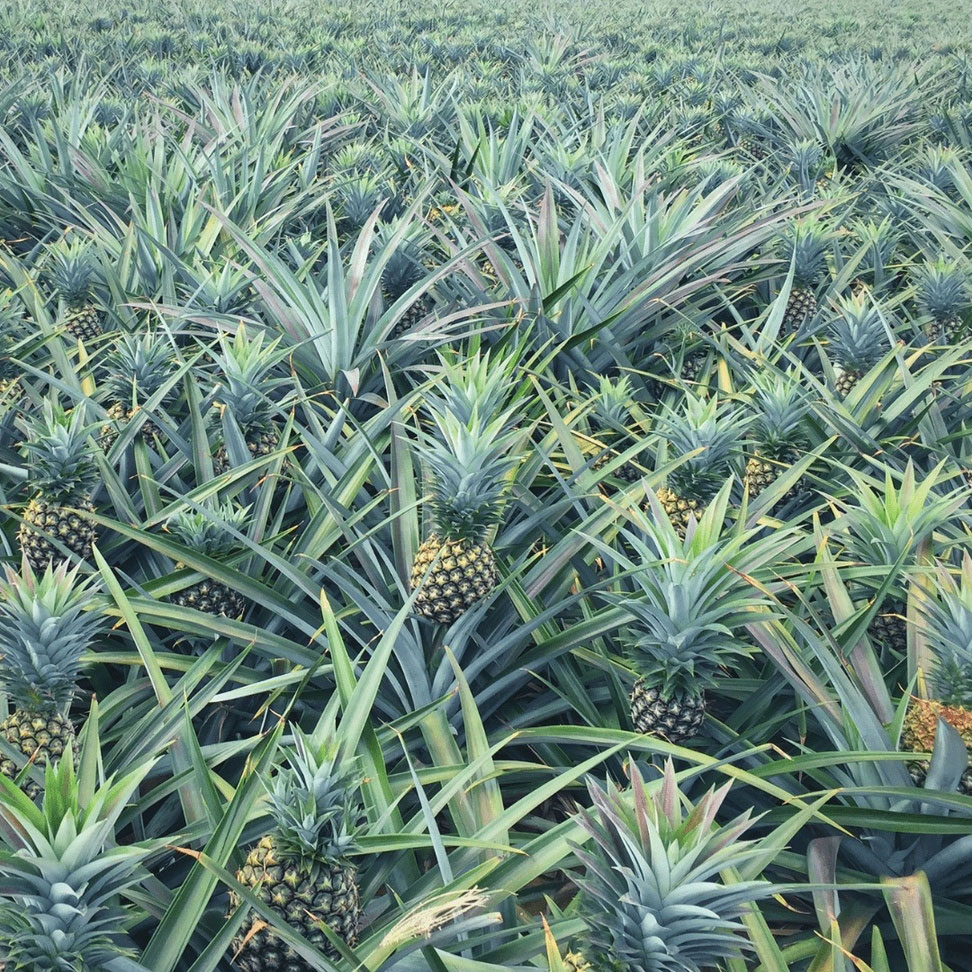
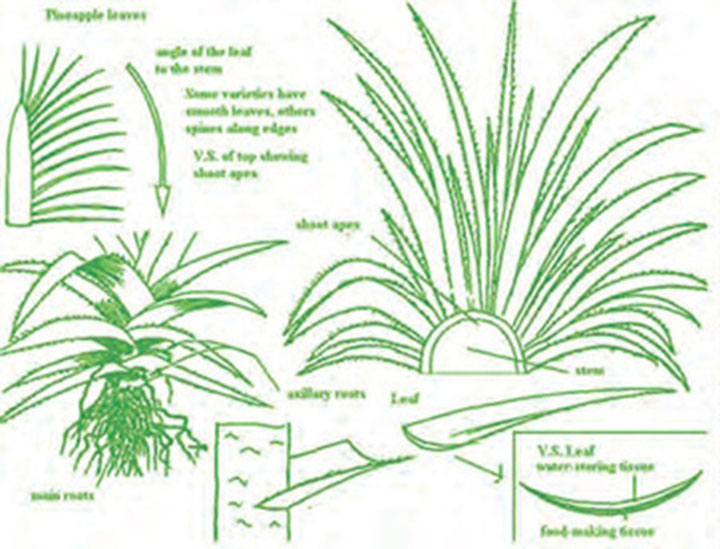
Pineapples usually ower from February to April and the fruits are ready for July to September. Sometimes, o -season owers appear and they produce fruits in September- December.
Why Pineapple?
Banana Biotechnology in Malaysia: Addressing Production Challenges Through Innovation
Banana is the second most commonly grown fruit crop in Malaysia. Overall banana production has decreased due to the increasing threat of Fusarium wilt disease, high labour costs and marketing issues. This program was initiated to improve banana cultivars by induced mutations and biotechnology, especially to produce mutant varieties with improved traits such as Fusarium tolerance, short stature plants, early fruiting and high bunch weight. Banana shoot-tip cultures were most suitable for micropropagation for large-scale plant production. Commercial companies have adopted this method, and they produce 1.3 million plants annually, with approximately 0.5% somaclonal variation.
The present research program was initiated with the objective of improving the important dessert bananas in Malaysia. This includes production of resistance or tolerance to Fusarium wilt or Panama disease, short plant stature, early fruiting, and high bunch weight. Banana cultivars are vegetatively propagated clones and are generally triploids and sterile. Tissue culture techniques have been exploited for (a) propagation of selected lines or natural variants; (b) generation of somaclones; (c) production of meristem pieces for in vitro mutagenesis and polyploidy induction; and (d) zygotic embryo culture to generate seed progenies for genetic and molecular studies.
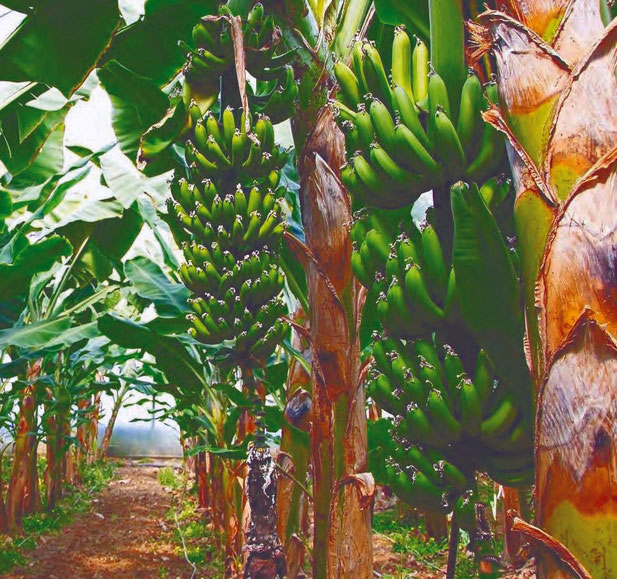
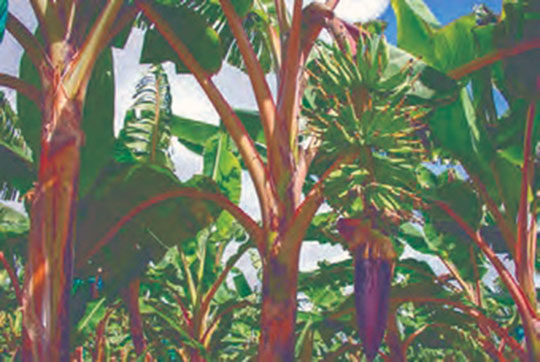
varieties in Malaysia.
The economic lifespan of bananas is about two years6 and they are often intercropped with perennial crops such as rubber and oil palm.